



Egypt
– Food & Drink –
Food & Drink in Wadi el Gemal
Rediscover a Mindful Approach
By using resources sparingly, avoiding waste, and adapting food to need and availability, a traditionally mindful approach to eating and drinking becomes evident. The local people reminded us of perspectives and practices that are often nearly forgotten in everyday life, such as the slow and conscious preparation of drinks and meals.
Al-Jabanah Coffee Ceremony
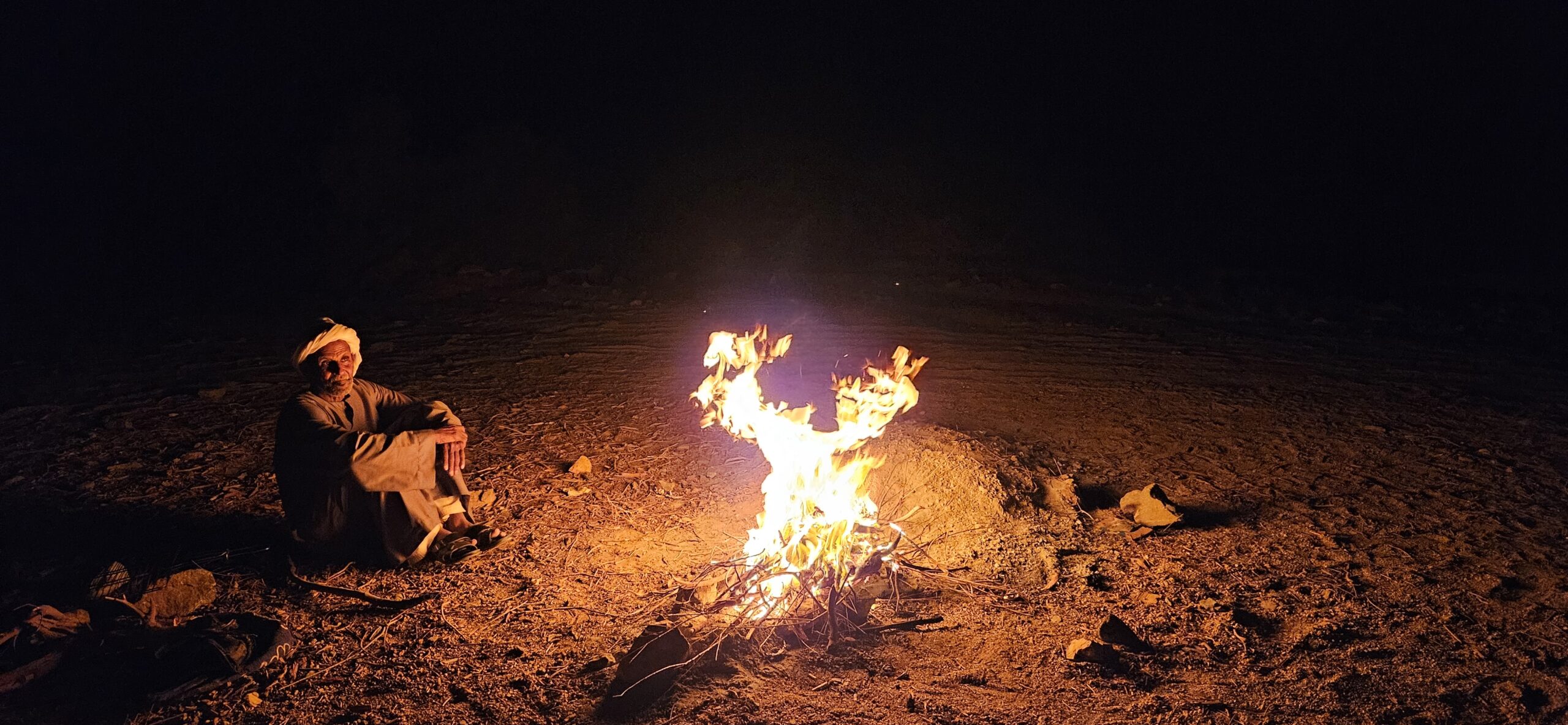
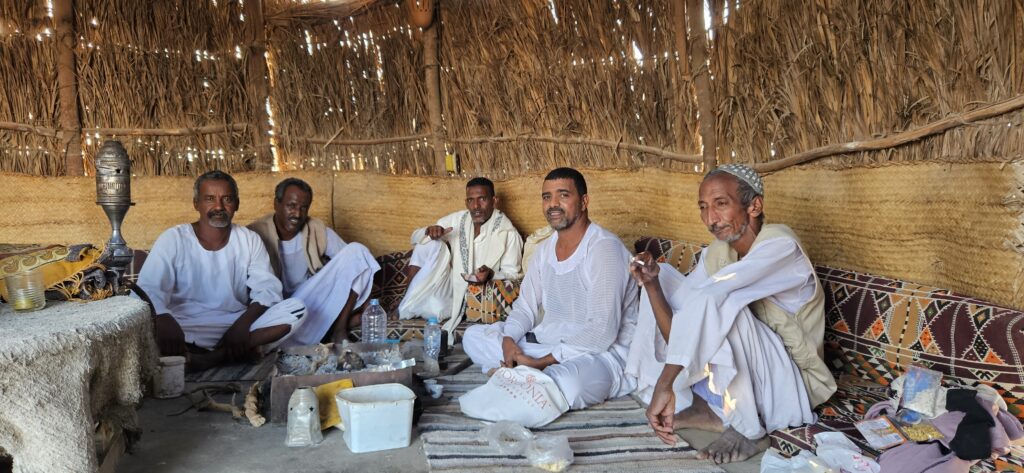
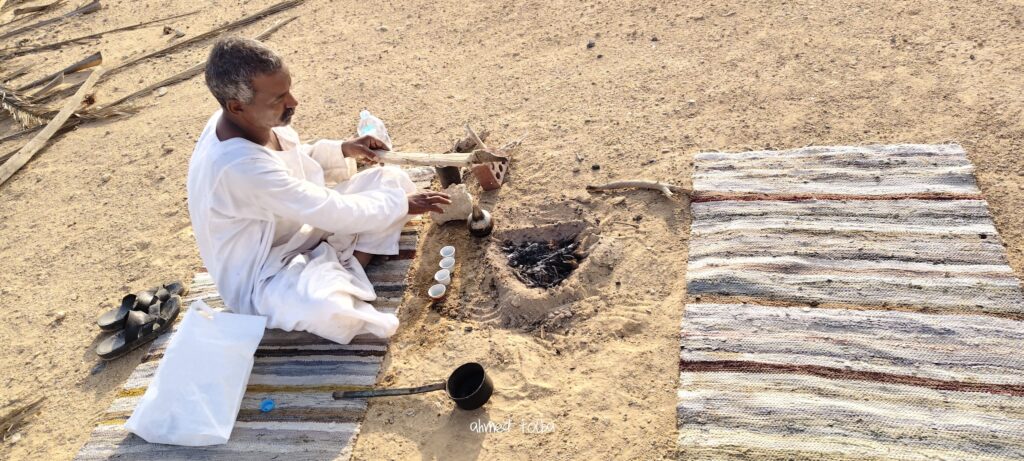
When the fire crackles softly and the scent of freshly roasted beans mingles with the dry desert air, a ritual begins among the Ababda that demands time and attention. In their makeshift shelters, built from acacia branches and woven palm leaves (borsh), they serve their guests tea (shai) and, above all, a special kind of coffee.
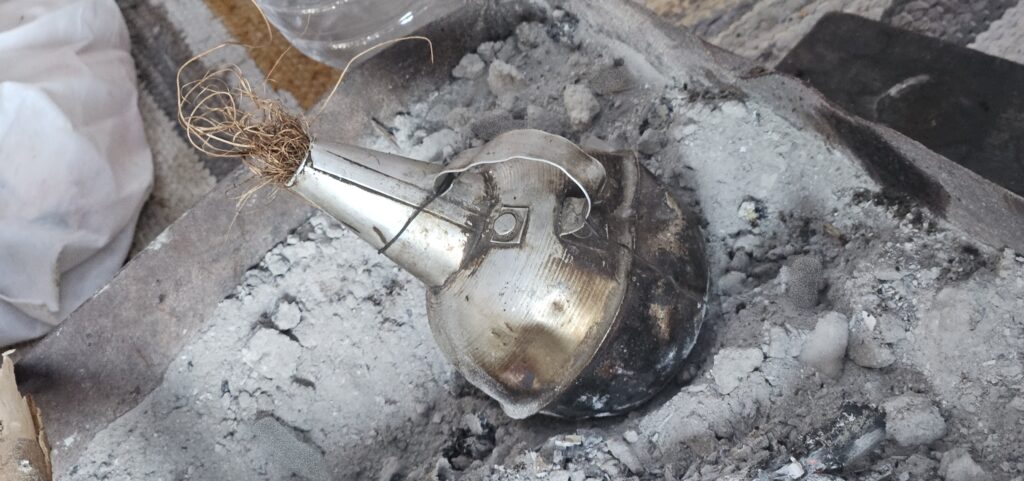
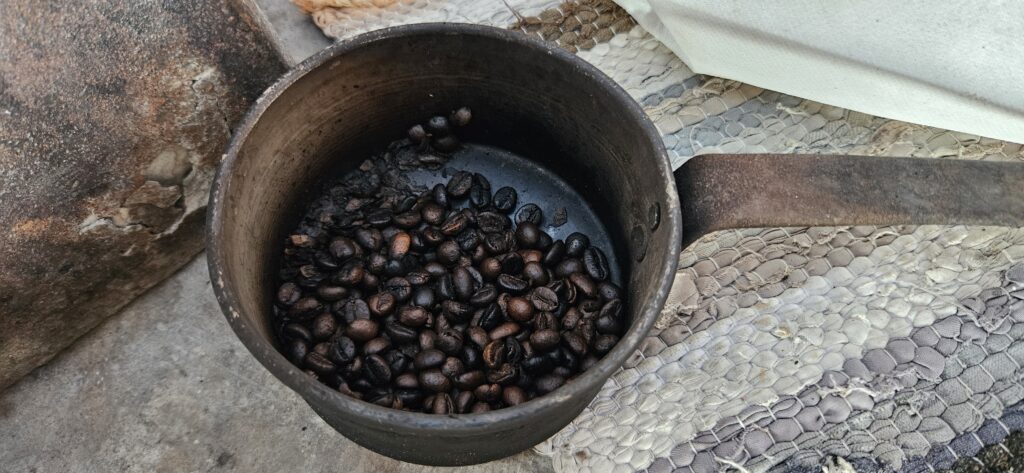
This traditional beverage, known as Al-Jabanah, is consumed at all times of day and is an integral part of the tribe’s strong culture of hospitality. Every gathering is an occasion for a coffee ceremony. The preparation follows a deliberately slow process: first, the coffee beans are roasted over an open fire and then carefully crushed in a small mortar. The resulting powder is boiled with water in a special long-necked vessel known as the jabanah, together with ginger and occasionally other herbs and spices.
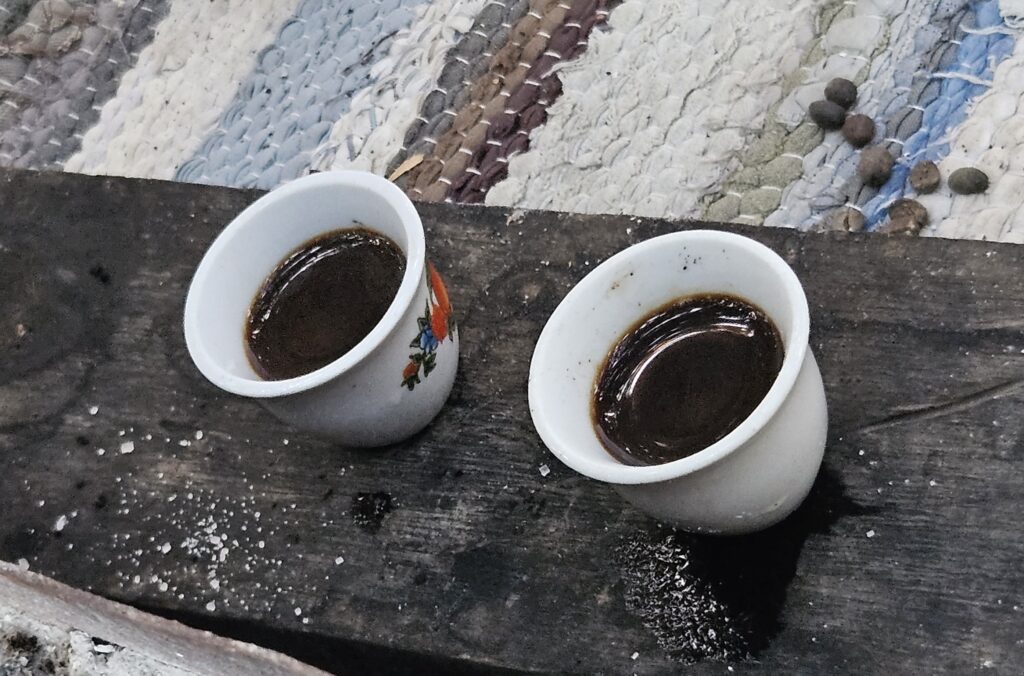
Depending on availability, the pot is made of clay or aluminum and is traditionally heated over a fire of dried shrub branches. At the end of the spout, a filter made of plant fibers retains the coffee grounds. The coffee is usually served three times in very small porcelain cups, even smaller than espresso cups.
The lengthy preparation creates space for conversations about family, trade, and everyday matters, as well as for calm exchanges with guests. Anyone who takes part in such a ceremony experiences far more than simple coffee drinking: in a respectful, unhurried atmosphere, the coffee is served with care – a ritual that places community at its center. The Ababda’s sense of calm is contagious, and we left the gathering deeply relaxed. And quite incidentally: the coffee is excellent!
Food Traditions
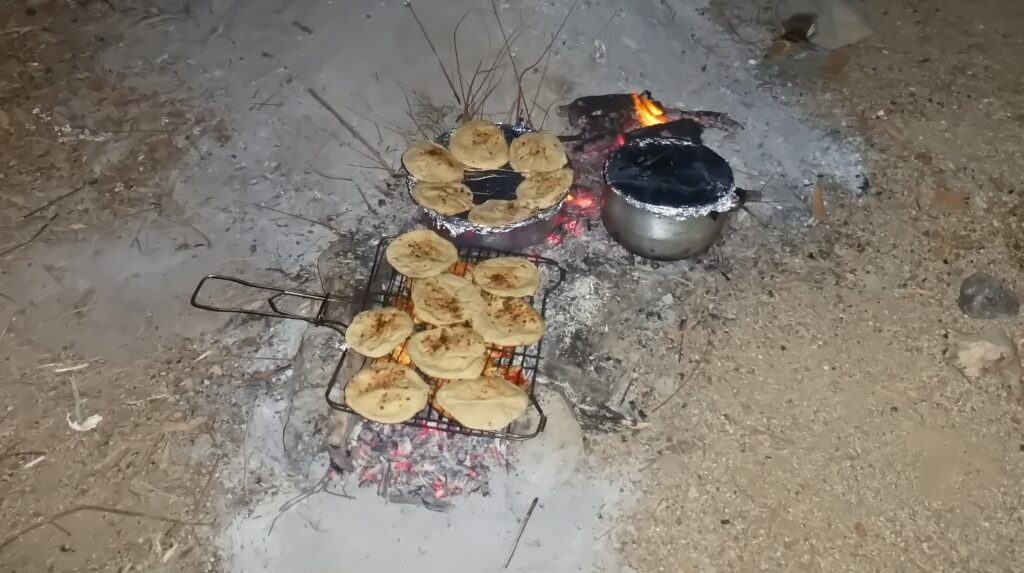
The desert shrubs provide not only the fuel for preparing coffee, but also for baking the Ababda’s traditional bread, known as gabori, which, together with goat meat, long formed the community’s main staple. The shrubs must already be dried – no Ababda would ever break a branch from a living bush or tree. Plants serve as food for animals, provide shade, or are used as natural remedies, and are treated with particular respect.
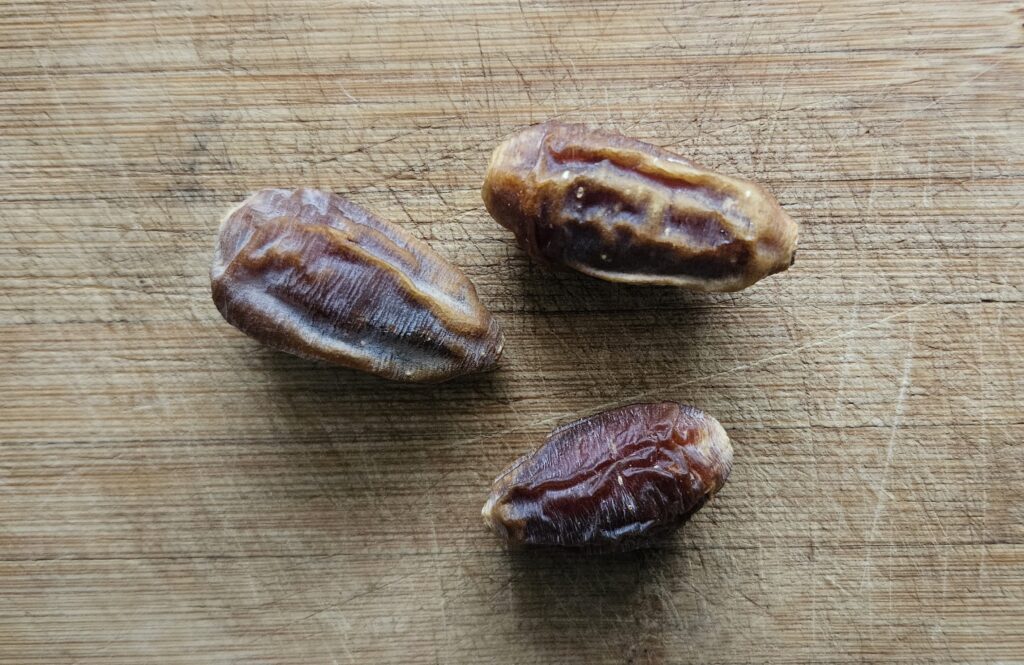
The bread is made by placing dough made from flour, water, and salt either directly onto hot ash (occasionally on a metal grate over the embers) or by burying it in previously heated sand. The process works as follows: dry fuel – usually dead acacia branches, shrubs, or date pits – is first lit on the sand. The fire is allowed to burn until the sand beneath is thoroughly heated. The flames are then left to die down or the embers are pushed aside. The hot ash or the heat stored in the sand then becomes the actual baking surface. In this way, the bread cooks evenly through the retained heat. This technique is energy-efficient, requires very little fuel, and is ideally suited to mobile lifestyles in the desert. It is also widespread among nomadic and semi-nomadic communities in arid desert regions.
Before wheat flour became widely available, the Ababda prepared breads made from maize that are now rarely made, such as redaf, which was baked on heated stones, and douka, a small baked good prepared on a thick metal plate over the fire.
Other typical dishes include sala’at, grilled meat cooked on hot stones, al-sa’an, a yogurt-based dish, as well as a simple porridge made from hot water, salt, milk, flour, and clarified butter.
Traditionally, the Ababda ate only when they felt hungry, without fixed mealtimes. For those Ababda living along the coast, fish has now become a daily source of food. Sheep and camel meat are mostly consumed only on special occasions such as festivals or weddings. The diet is often supplemented with lentil soups, rice, vegetables, and fruit, always accompanied by freshly baked bread.
Leave a Reply