



Egypt
– Land & People –



- The People of the Desert
- Emerald Mines of Wadi el Gemal
- Ancient Caravan Route
- Desert Knowledge
- The Ababda
- Customary Law
Land and People in Egypt
The People of the Desert
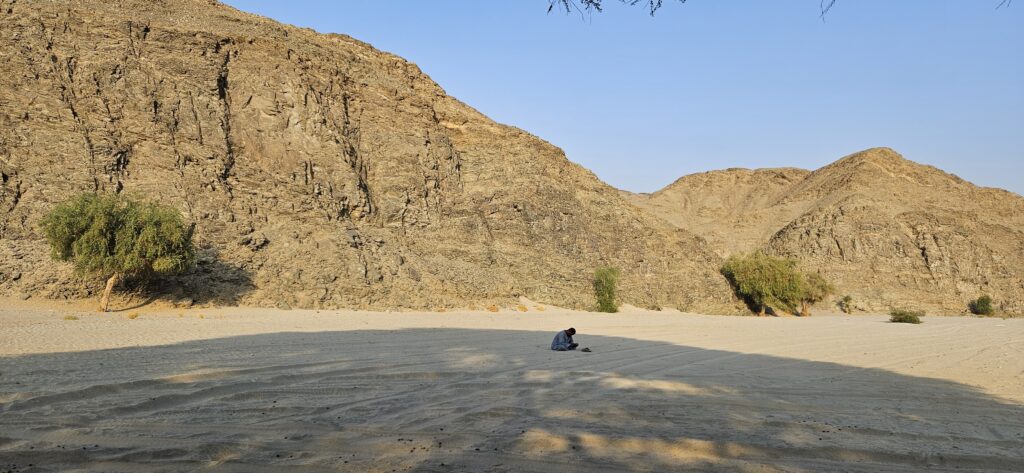
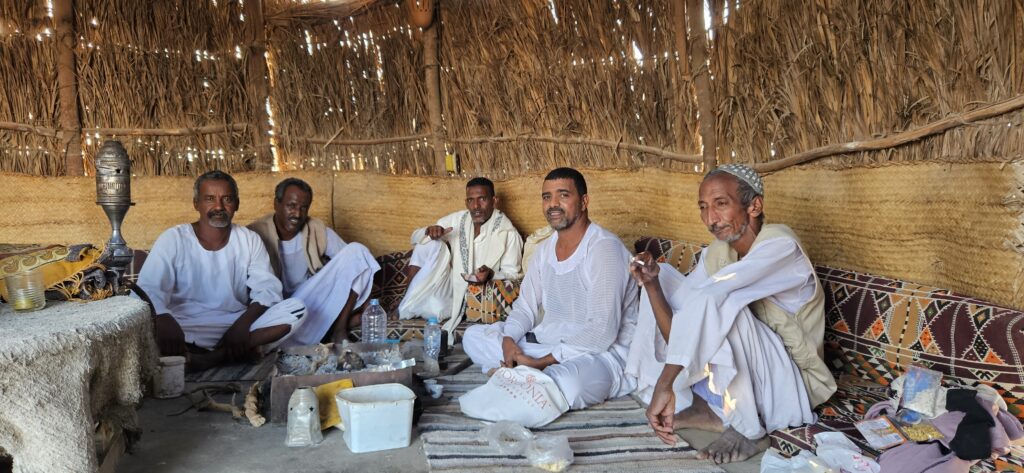
Meeting the Ababda gave us an authentic access to Wadi el Gemal and offered deep insights into a centuries-old way of life, vividly documented at the Beyt el Ababda (House of the Ababda) at the old entrance to Wadi el Gemal National Park. Many of their traditions have been preserved to this day, with song and music holding a particularly important place. As Bedouins with nomadic roots, their culture remains closely tied to the desert, its routes, and its resources.
Emerald Mines of Wadi el Gemal
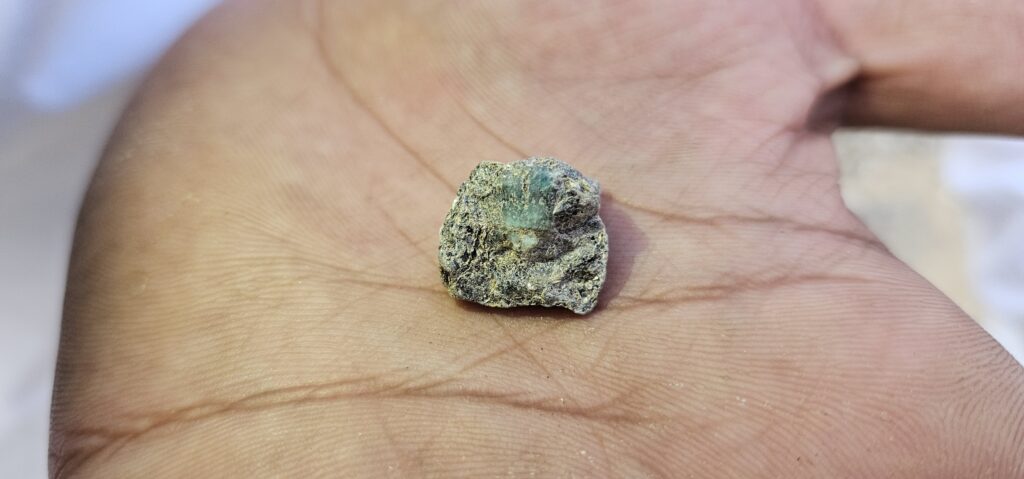
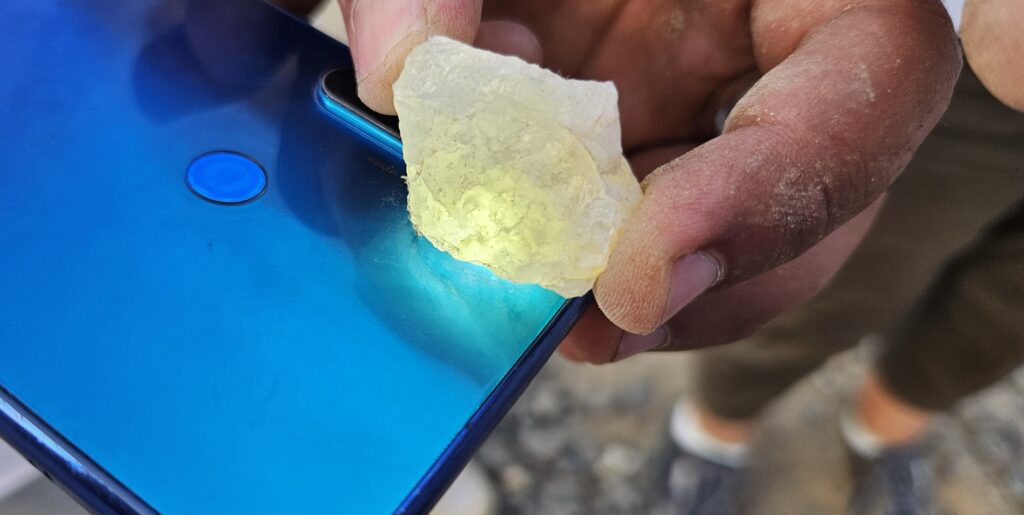
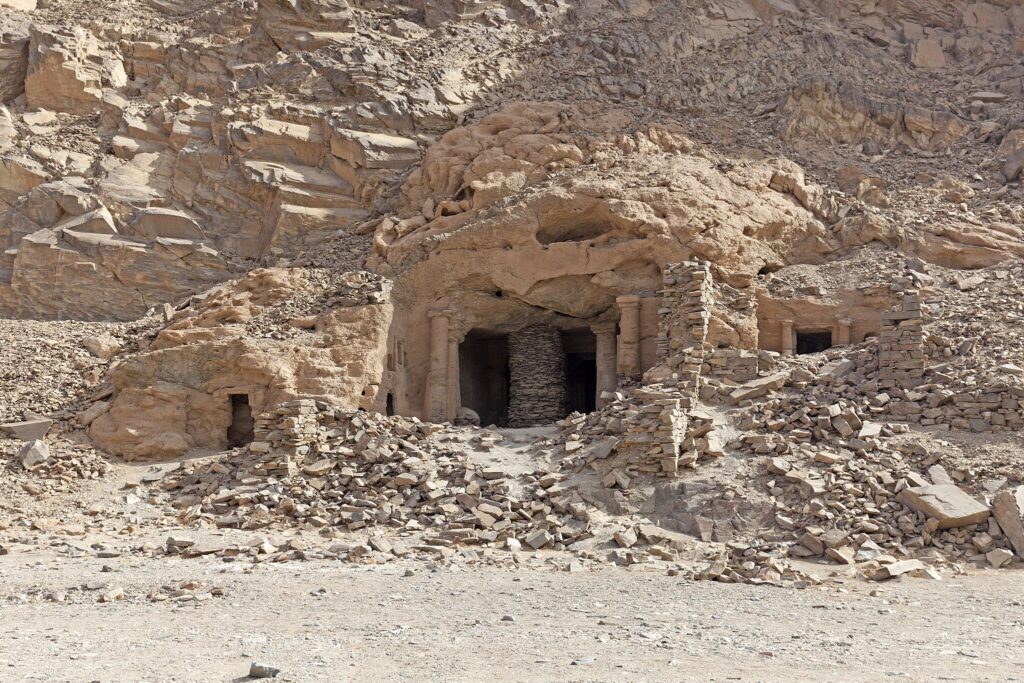
Wadi el Gemal, in Egypt’s Eastern Desert, was known in antiquity primarily for its emerald mines. Emeralds were highly valued in the Hellenistic-Roman world and were regarded as symbols of power, wealth, and divine favor. The earliest written references date back to the reign of Ptolemy XII (117-51 BC), the father of the famous Cleopatra. In addition to emeralds, alabaster is also found in the region – a fine-grained, light-colored stone that is easy to work and was traditionally used for vessels, sculptures, and architectural elements.
Emeralds are a green variety of the mineral beryl. Their color is caused by small amounts of chromium within the stone. In Wadi el Gemal, these gemstones were able to form because particular geological conditions prevail there: magmatic rocks such as pegmatite meet schist, which formed from clay and mud under high pressure. This combination contributed to the mines of Egypt’s Eastern Desert – including those of Wadi el Gemal – being regarded for centuries as the most important, and at times even the only known, sources of emeralds in antiquity.
The mines were in operation by around 100 BC at the latest and continued to be used until the 15th century. Visible remains of this mining activity still shape the landscape today. A central testimony to this period is the Great Temple of Sikait, located in the midst of the former mining areas and highlighting the historical significance of Wadi el Gemal.
For reasons that remain largely unknown to this day, Berenice was abandoned in the 5th century AD. The sand buried and preserved the remains of the city, which are now gradually coming back to light. Among the many discoveries are numerous inscriptions and texts in eleven different languages – some of which are still unknown.
Ancient Caravan Route
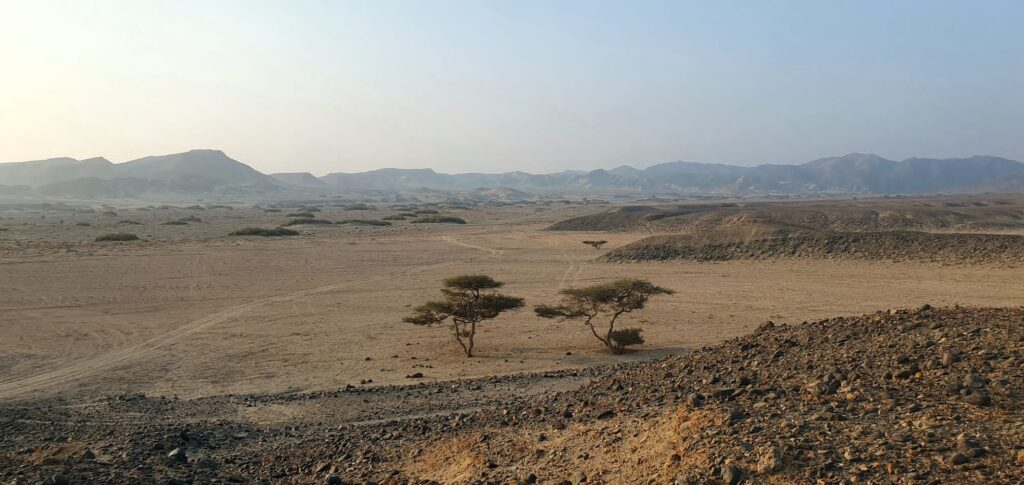
In addition to its emerald deposits, Wadi el Gemal owed its significance primarily to its location along one of the most important trade routes of antiquity. A caravan road ran through the valley, connecting the Ptolemaic port of Berenice on the Red Sea with the Nile Valley.
Along this route, goods from India, the Arabian Peninsula, and East Africa reached the Mediterranean world, including spices, gemstones, cotton textiles and silk, as well as aromatic resins such as frankincense and myrrh, in addition to ivory, gold, animal hides, and occasionally even exotic animals. In Berenice, these goods were transferred from ships onto camels, transported across the desert to the Nile, and from there shipped onward to Alexandria and the Roman Empire. Berenice thus became one of the most important gateways through which luxury goods entered the Roman world via the Indian Ocean.
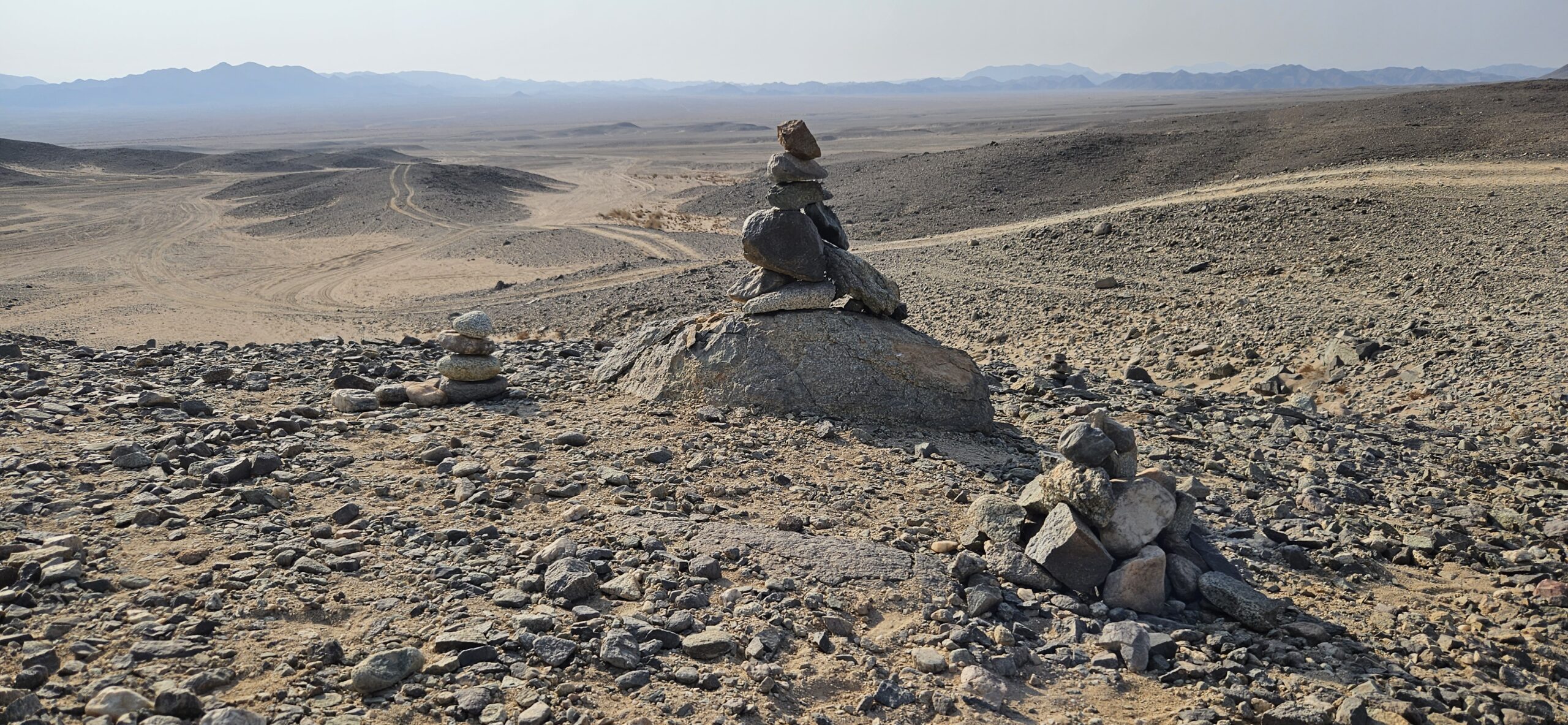
This desert road is still visible in places today and is partly still in use. Along the former caravan routes, numerous well-preserved rock carvings can be found. They depict historical events of the nomadic population as well as animal species such as ostriches, which no longer occur in this region today. More recent depictions of sailing boats and camels point to the long history of trade and travel through this desert region along the Red Sea.
Desert Knowledge
Water
Life in the desert requires a deep knowledge of the land, especially of its water sources. These are known by different names that convey important information about the quality, reliability, and quantity of the water. In this way, risks can be reduced for all those planning long journeys through the desert.
Even in antiquity, caravans – often traveling through the desert for weeks at a time – relied on a network of marked wells. To this day, they are carefully maintained by the Ababda Bedouins. When passing a well, it is customary to leave buckets of water for wild and domesticated animals – a gesture of respect for life in this harsh landscape.
Reading Traces, Finding Paths
For centuries, the Ababda have safely guided trade caravans, miners, and explorers through the vast expanses of the desert. As indispensable guides, they once also accompanied pilgrims from the Nile Valley to the ports on the Red Sea – the first stage of the long journey to Mecca. They continue this tradition to this day as desert guides for visitors to Wadi el Gemal National Park.
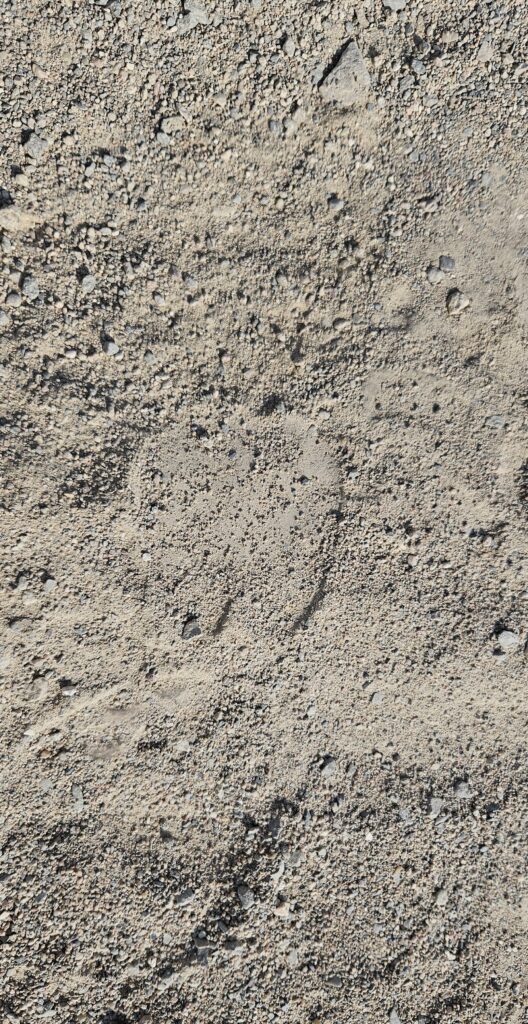
Over time, some Ababda have developed a remarkable ability to read tracks. By studying the imprints left by animals in the sand, they can identify which camels or vehicles have passed through. Camels – especially dromedaries – leave individually distinguishable tracks, and experienced trackers are indeed able to tell them apart. In this way, the Ababda can even follow the trail of a stolen camel in order to find it and return it to its rightful owner.
Stars
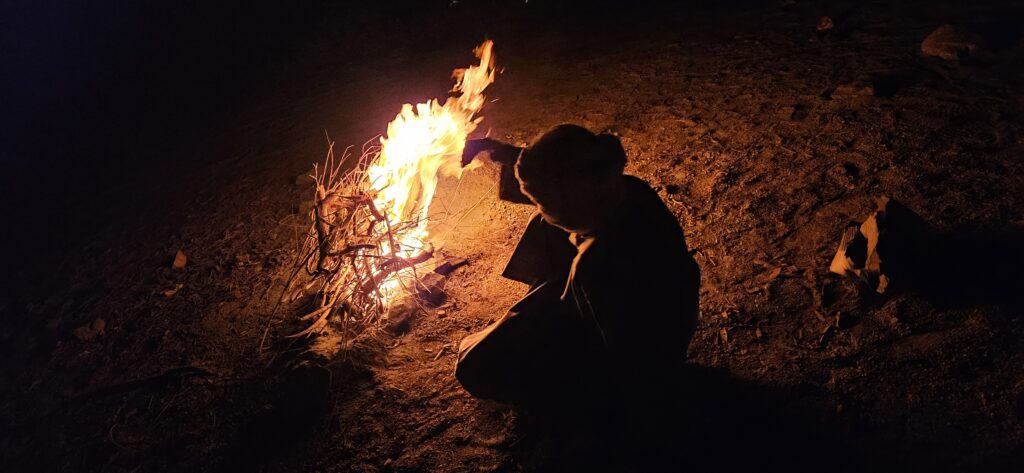
Stars play a central role in the lives of the Ababda. They serve as points of orientation in the vast desert landscapes, helping to determine east, west, north, and south, as well as wind direction and seasons. We experienced this ourselves: in complete darkness, our Ababda guide found the way effortlessly simply by reading the stars – an impressive experience.
The positions of certain stars and the moon are also used to determine the timing of special occasions, religious holidays, and weddings, which are usually celebrated at full moon. In addition, the celestial bodies help to predict rainfall or to recognize when certain fish shoals are found close to the coast. They form a precise calendar that indicates climatic cycles. This astronomical system of navigation and forecasting has been refined over centuries through careful observation. In regions without measuring stations, the sky is a remarkably reliable reference system. Accordingly, stars and celestial bodies also play an important role in Arabic poetry.
Plants
Due to the scarcity of resources in this region, the Ababda have learned to manage with extremely small amounts of water, wood, and desert plants. From this emerged a culture that treats nature responsibly and approaches it with great respect. Through their close relationship with the environment, they developed extensive traditional knowledge about the diverse uses and healing properties of certain plants. Medicinal plants are collected selectively, and their characteristics are well understood.
Fishing and the collection of plants are generally prohibited in Wadi el Gemal; as indigenous inhabitants of the region, the Ababda are exempt from these restrictions. The plants they collect are used either for their own needs or sold at the market. In the past, the Ababda also produced charcoal from dead shrubs and trees. An Ababda would never break a branch from a living tree that provides food for people and animals, offers shade, or can be used as a medicinal plant. The use of natural resources is also governed by an old tribal law that forbids the Ababda to damage or cut down living trees.
With the growing influence of modernity and tourism, everyday life for the Ababda is changing noticeably, and it has become more challenging to keep their cultural heritage, traditions, and unique knowledge alive. This is evident not least in the recent settlements in a government-built village near the Red Sea coast. While this may offer many modern conveniences, it also alters their nomadically shaped way of life.
The Ababda
The Ababda are the long-established inhabitants of Wadi el Gemal. Little is known about their exact origins. Western sources, as well as genetic and linguistic studies, suggest that the Ababda belong to the Beja people of present-day Sudan, who settled the Arabian Desert centuries ago. According to this view, they are said to have settled along the Red Sea as early as Pharaonic times and to have been Islamized in the 14th century. Regional and local traditions, however, trace their ancestry back to the Arabian Peninsula.
Their settlement area extends from the Nile Valley to the Red Sea coast and as far as the Sudanese border. Today, several thousand Ababda live in Wadi el Gemal, divided into different tribes; Abbad is regarded as their progenitor. The tribe is the largest familial unit and is subdivided into around 20 clans, which trace their lineage through the paternal line. An Ababda family typically consists of seven members: father, mother, and five children.
Originally, they were nomads and hunters, a heritage recalled in their traditional sword and shield dance, the Maggad. Later, they became herders, breeders of goats and dromedaries, and fishermen. To this day, they practice sustainable fishing, using traditional methods to avoid depleting the sea’s natural resources. They catch only what they truly need, aligned with the immediate needs of the community. The fish most commonly eaten are red mullet, parrotfish, rabbitfish, and angelfish. Many Ababda work as artisans and desert guides in tourism, while others live from livestock herding and simple agriculture in the wadis and mountains.
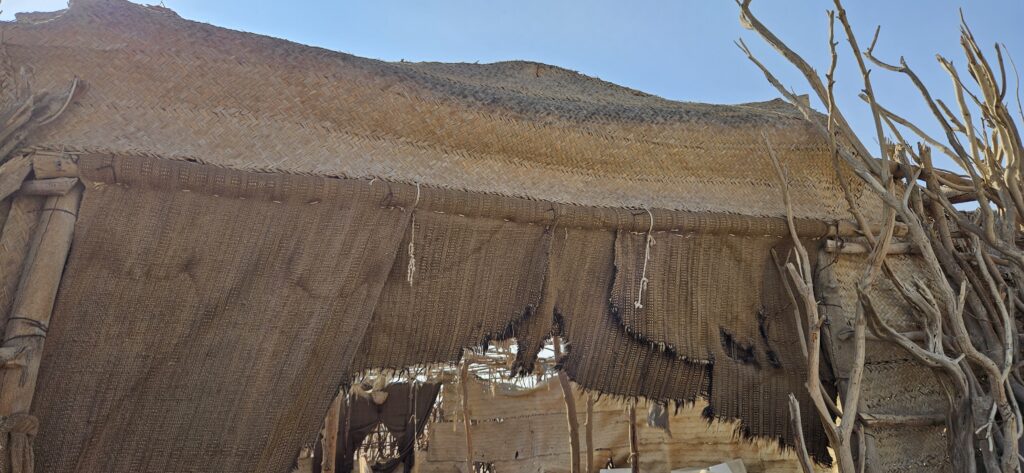
Some Ababda still lead a semi-nomadic life today and live in simple huts known as bursh. These are traditionally built from a framework of long branches with a domed roof. The outer walls are covered with woven mats made from palm fronds (khisha), while the interior is lined with carpets of goat hair. Everything that can be recycled is reused in their construction to create functional, temporary shelters that provide protection from wind and heat. Because the huts are mobile, families store clothing, water, and milk in saddlebags hanging from the walls.
Customary Law
The Ababda have developed an unwritten system of customary law that governs both communal life and the use of natural resources – for example, stipulating that trees may only be felled and branches broken if they are already dried out or dead. This traditional law also includes social customs, such as the wedding practice according to which the groom is not allowed to work during the traditionally 40-day honeymoon, while the wedding celebration itself lasts five nights.
Disputes within the community mainly concern livestock herding or family matters. When problems arise, the council (Majles), chaired by an elder (Sheikh), convenes. He listens to both sides and then delivers a judgment, which is generally accepted. If a dispute involves several tribes, independent mediators are called in. State courts are only rarely involved, as the Ababda strive to resolve conflicts by consensus and to maintain peaceful coexistence in this already sparse and harsh region.
Most grazing areas in Wadi el Gemal have belonged to individual families for generations. During dry periods, they use their own land, while in winter and during the flowering season they move freely across different grazing grounds and larger areas.
Leave a Reply